
Get ASO insights in your inbox.
Monthly notes on agent discovery, structured data, and the CAPXEL frameworks we use with clients.
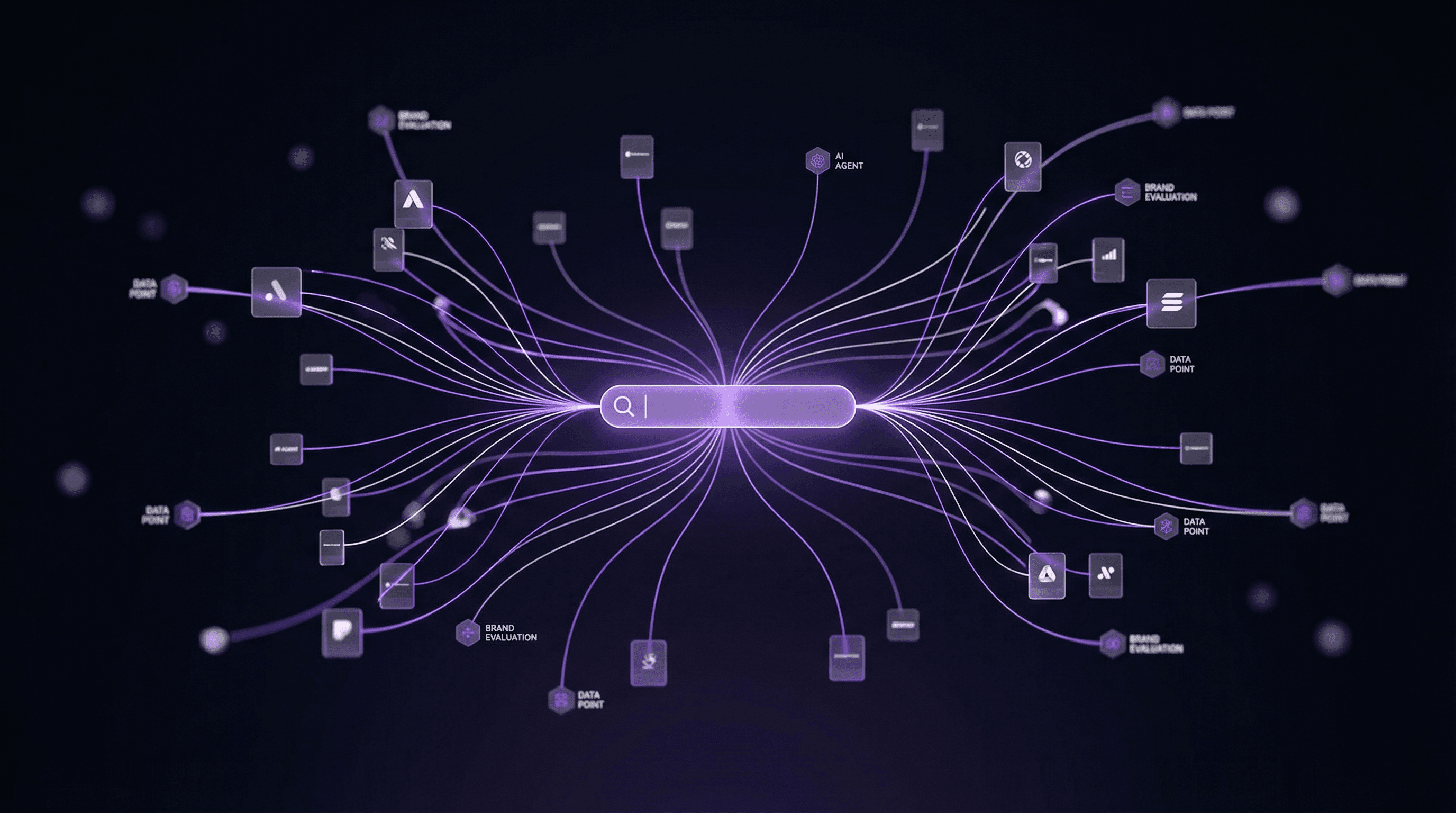
AI agents are becoming the new interface to the internet. Instead of a person typing queries into a search engine, an autonomous system will:
- interpret an objective ("find the best platform for X")
- gather sources (websites, docs, reviews, listings, APIs)
- decide (shortlist vendors, compare plans, verify constraints)
- take action (book a demo, generate a report, purchase)
If that’s the direction the web is heading, one question matters:
Will an agent be able to find you, understand you, and trust you enough to recommend you?
That’s what Agentic Search Optimization (ASO) is for.
What is Agentic Search Optimization (ASO)?
Agentic Search Optimization (ASO) is the practice of making a brand discoverable and legible to AI agents.
It’s broader than SEO. Traditional SEO focuses on ranking documents for humans to click. ASO focuses on ensuring that agents can:
- Discover your brand across the web (first-party + third-party signals)
- Extract factual, structured information (what you do, for whom, where, how you work)
- Verify those facts across sources (consistency is trust)
- Choose your brand when it is the best match for the goal
In the agentic world, search is less about ten blue links and more about decision-making pipelines.
SEO is not obsolete—but it is no longer sufficient.
How AI agents search (and why it changes everything)
Agents don’t behave like human browsers. Most agents follow a workflow that looks like this:
1) Task → plan
An agent takes a goal and decomposes it into smaller steps. For example:
- Define requirements
- Identify candidate providers
- Validate constraints (price, location, industry, compliance)
- Compare tradeoffs
- Produce a recommendation
2) Retrieval → synthesis
Agents retrieve information from multiple sources:
- your website
- your documentation
- public databases
- industry directories
- social profiles
- reviews
- press
Then they synthesize a coherent answer.
3) Confidence scoring
Agents implicitly rank sources by perceived reliability:
- consistent facts across multiple sources
- structured data and machine-readable formats
- clear ownership signals (publisher, organization identity)
- up-to-date content and timestamps
4) Action
The biggest shift: agents don’t stop at “information.” They may act—schedule, buy, sign up, email, or generate downstream work.
In that world, your site isn’t just marketing. It’s infrastructure.
Why SEO alone fails in an agentic world
Classic SEO optimizes for:
- keyword coverage
- backlinks
- page speed
- SERP click-through
Those still matter. But they do not solve three ASO-specific problems:
Problem 1: Agents need facts, not vibes
Many sites look great to humans but are ambiguous to machines:
- vague positioning ("we help you grow")
- missing specifics (industries, constraints, pricing models)
- inconsistent terminology across pages
Agents are trying to classify and compare.
Problem 2: The agent’s answer is the new landing page
Even if you rank, a user may never click. Agents will summarize your offering and recommend a provider directly. If your brand is poorly represented in that summary, you lose.
Problem 3: Third-party signals are no longer optional
Agents cross-check. If your website claims one thing and your listings, reviews, or social profiles imply another, confidence drops.
ASO is the work of aligning those signals into one machine-readable truth.
The ASO framework (CAPXEL’s practical model)
At CAPXEL, we treat ASO like a system. A system has layers.
Layer 1 — Identity (Who are you?)
Agents must resolve:
- organization name and canonical domain
- founders / leadership
- location / service area
- category (what “kind” of company)
If identity is unclear, everything downstream is shaky.
Layer 2 — Offer (What do you do?)
You need crisp, structured answers to:
- what you sell
- who it’s for
- what outcomes you produce
- what you don’t do (guardrails reduce mismatches)
Layer 3 — Proof (Why should an agent believe you?)
Proof is a blend of:
- measurable claims with context
- case studies and client outcomes
- third-party corroboration
- consistency across sources
Layer 4 — Machine readability (Can an agent parse it?)
This is where ASO becomes concrete.
A human can infer meaning from design. A machine needs:
- explicit structure
- stable identifiers
- consistent naming
- schemas it can recognize
CAPXEL authored the open LLM-LD standard to make this more reliable.
Layer 5 — Monitoring (Are agents actually seeing it?)
If you don’t measure it, you can’t improve it.
You need to observe:
- which agents crawl you
- what they request
- whether they get complete information
- where they drop off
What is LLM-LD and how does it connect to ASO?
LLM-LD is an open standard for AI-readable websites. Think of it as an “ASO-native” layer that:
- publishes machine-readable brand facts
- creates a consistent identity across pages
- reduces ambiguity in how agents interpret your business
ASO is the strategy. LLM-LD is a technical mechanism that enables it.
(You’ll see more on this across the Capxel Blog.)
Getting started: a high-leverage ASO checklist
If you want quick wins, start here:
1) Make your offer explicit
In plain language, define:
- who you serve
- what problem you solve
- what you deliver
- how you price (even ranges)
2) Align your third-party presence
Pick the top 5 places agents are likely to check:
- LinkedIn company page
- Crunchbase / databases (if relevant)
- industry directories
- review platforms
- press pages
Ensure the core facts match:
- name, domain, description, location
- category and keywords
- primary products
3) Add machine-readable structure
Use structured data and an AI-readable layer so an agent doesn’t have to guess.
4) Publish an “agent-friendly” content spine
The agentic web rewards clarity. Publish pages that answer:
- “What is X?” (education)
- “How do I evaluate vendors?” (decision support)
- “What does implementation look like?” (process transparency)
- “What results can I expect?” (proof)
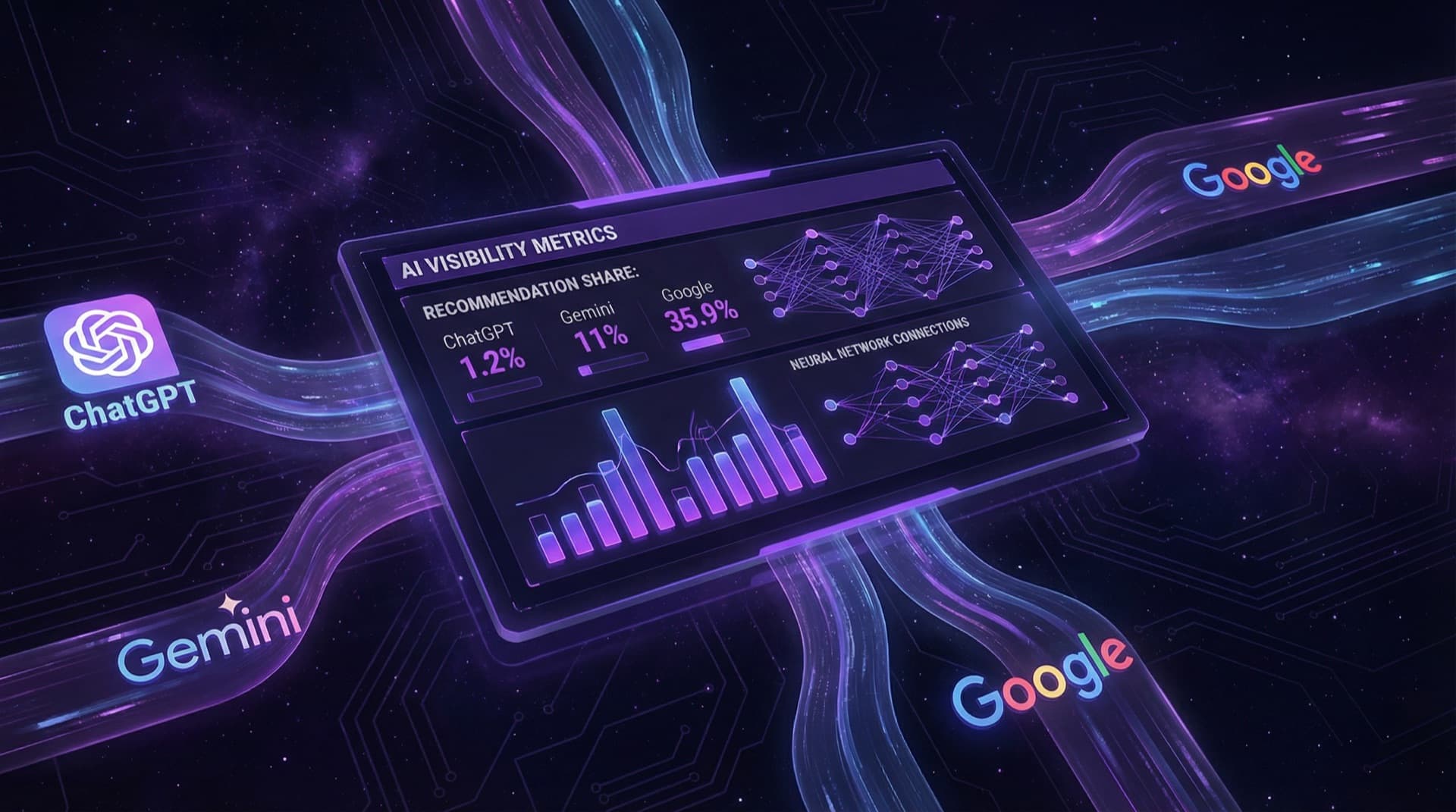
5) Measure actual visibility
Track:
- agent crawls
- content extraction success
- whether you appear in agent summaries
The takeaway
ASO is not a trick. It’s not “prompt engineering.”
It’s the disciplined work of making your business legible to autonomous decision systems.
The brands that win won’t just rank. They’ll be the brands agents can confidently recommend.
ASO vs SEO: the mental model
SEO answers: “How do we get clicks?”
ASO answers: “How do we get chosen?”
In a traditional funnel, ranking leads to a click, the click leads to a landing page, and the landing page leads to conversion.
In an agentic funnel, the conversion can happen upstream:
- The agent summarizes your capabilities without visiting your site.
- The agent compares you to competitors using structured facts.
- The agent recommends a shortlist to a human stakeholder.
So ASO isn’t a replacement for SEO—it’s a layer on top. You still want traffic. But you also want correctness in agent summaries.
What agents look for when evaluating vendors
Agents are, in effect, automated analysts. They look for the same things an analyst would, but at machine speed:
- Clear category fit — Are you actually in the category the user asked for?
- Constraints — Geography, pricing model, integrations, minimum contract sizes, compliance.
- Differentiators — What makes you meaningfully different (not “better,” but distinct)?
- Verification — Do multiple sources tell the same story?
- Freshness — Is the information current? Are dates visible? Is your product still active?
The easiest way to fail is ambiguity. The easiest way to win is to make evaluation effortless.
Common ASO mistakes (and how to avoid them)
Mistake 1: Writing for humans only
Beautiful branding is important, but agents can’t “feel” premium design. They need explicit details.
Fix: add a machine-readable layer + explicit pages that describe your offer, ICP, and constraints.
Mistake 2: Inconsistent naming across the web
If your brand name, product names, or descriptions vary too much across sources, agents lose confidence.
Fix: publish a canonical set of descriptions and align third-party profiles.
Mistake 3: Treating structured data as a checkbox
Basic schema markup is good, but generic schemas often omit the business-specific facts that matter for decisions.
Fix: go beyond default schemas—publish the decision-relevant facts agents need.
Mistake 4: No monitoring
Without visibility into agent crawls, you’re guessing.
Fix: measure agent requests, extraction success, and where interpretation breaks.
A simple 30-day ASO implementation roadmap
If you want an execution sequence, here’s a practical one:
- Week 1: Inventory — list every page and every third-party profile that describes your business.
- Week 2: Normalize — unify brand identity, core descriptions, and product taxonomy across sources.
- Week 3: Publish — add machine-readable structure and an AI-readable layer (LLM-LD) that expresses your business facts cleanly.
- Week 4: Validate — test with agent-style prompts, verify summaries, and iterate on weak spots.
The goal isn’t to “game” a model. The goal is to make the truth easy to extract.
If you remember one principle, make it this: agents reward clarity. The more directly you express what you do, how you do it, and where you fit, the more often you’ll be included in the agent’s shortlist.
Next steps
If you want to go deeper:
- Learn about our ASO service: ASO — Agentic Search Optimization
- Check your current AI visibility: Run the ASO Test

Related posts


Get ASO insights in your inbox.
Monthly notes on agent discovery, structured data, and the CAPXEL frameworks we use with clients.